 Long Island

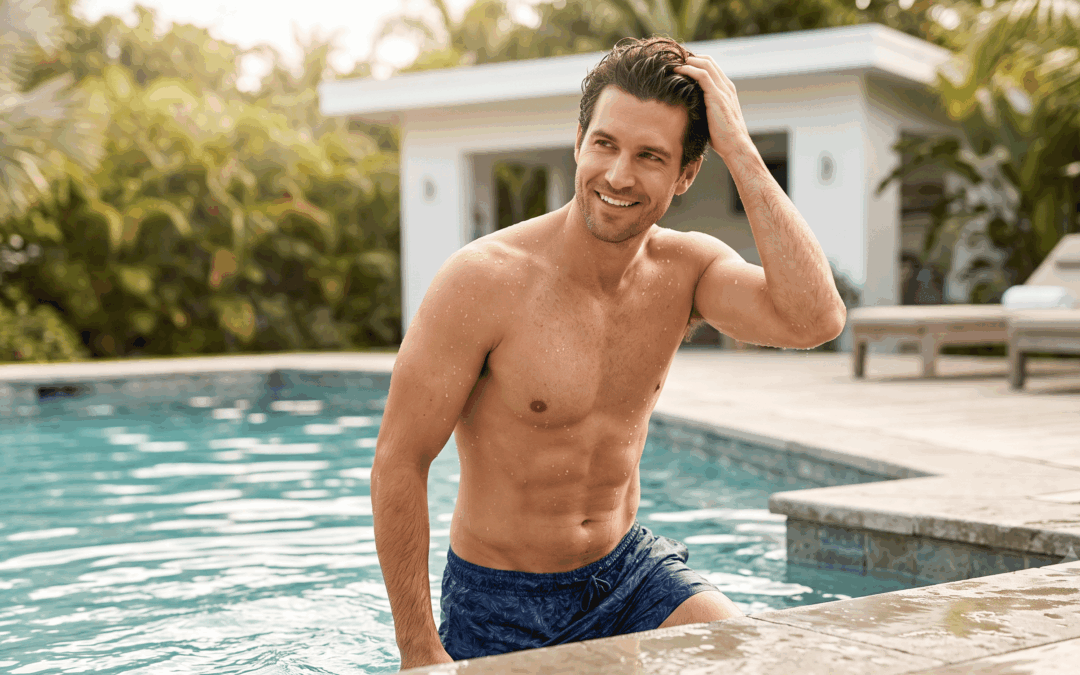
Summer means more hours in the pool, and for a lot of people it also brings a quiet new worry. Hair that used to feel soft starts to feel dry and straw-like, the comb snags more than it used to, and a few extra strands show up in the shower drain after a swim. If you have started to wonder whether the pool is thinning your hair, you are not imagining the change in texture, and you are far from the only person asking the question.
The relationship between chlorine and hair loss is actually more reassuring than most people expect once you understand what chlorine really does to a strand of hair. The single most useful thing to know is the difference between the hair shaft and the hair follicle, because that distinction explains almost everything about pool-related hair worries.
At LA FUE Hair New York, we hear this concern often, especially in the warmer months when patients come in convinced that frequent swimming is the cause of their thinning. Sometimes chlorine is part of the picture, and sometimes it is masking something else entirely. Either way, the goal of this article is to separate real hair loss from cosmetic damage, explain what is happening to your hair, and give you a practical routine that lets you keep swimming without sacrificing the health of your hair.
Does Chlorine Cause Hair Loss?
Here is the direct answer: chlorine does not cause permanent, follicle-based hair loss the way a condition like androgenetic alopecia does. Chlorine is not a recognized cause of the kind of progressive thinning that comes from genetics, hormones, or autoimmune disease. What chlorine does affect is the hair shaft, the visible strand that has already grown out of your scalp. When that shaft is weakened, it snaps and frays, and the breakage can look and feel a lot like thinning even though the root system is untouched.
This is why the shaft-versus-follicle distinction matters so much. The follicle is the living structure beneath the surface of the scalp that actually produces hair. The shaft is already-dead protein. Chlorine works on the dead protein it can reach, not on the living factory below. So, when patients ask whether swimming is making their hair fall out, the honest answer is usually that swimming is making their hair break, and breakage and shedding can be hard to tell apart in the mirror.
Does Chlorine Cause Permanent Hair Loss?
No. The follicle sits below the scalp surface, protected by skin and sebum, so ordinary pool water does not reach the living structure that actually grows your hair. Your ability to grow new, healthy hair stays intact.
The damage chlorine causes lives on the strands you already have, and those strands are constantly being replaced through the normal growth cycle. That means chlorine-related damage is, by definition, temporary –protect and repair the hair, and the new growth comes in healthy. If you are genuinely losing density at the root, such as a receding hairline, a widening part, or a thinning crown, then chlorine is almost certainly not the culprit, and it is worth looking at other causes.
How Does Chlorine Damage Hair?
To understand what chlorine’s effect on hair really is, it helps to know that chlorine is a powerful oxidizing agent. Pools are chlorinated specifically because that oxidizing power kills bacteria, but the same chemistry acts on your hair. Chlorine strips away the natural oils that protect the hair shaft, dissolving the thin layer of sebum that normally keeps each strand flexible and sealed.
Once that protective layer is gone, chlorine begins breaking down the keratin proteins in the cuticle, the shingle-like outer surface of the hair. The cuticle scales lift and fray instead of lying flat, which is what gives chlorine damage its signature symptoms: dryness, brittleness, frizz, tangling, dullness, and split ends. Hair that has lost its cuticle integrity also becomes more porous, so it soaks up even more chlorine the next time you swim, and the cycle compounds.
Chlorine Buildup in Hair
Repeated exposure leads to chlorine buildup in hair, where chemical residue and dissolved minerals from the water accumulate on the strand over time. One of the most visible signs is a faint green tint that sometimes appears in lighter or color-treated hair. Contrary to popular belief, that green color is caused by copper in the water that chlorine oxidizes, not by the chlorine itself. Either way, buildup leaves hair feeling coated, heavy, and harder to manage, and it will not rinse out with an ordinary shampoo.
Swimmer’s Hair and Damage From Pools
People who swim several times a week, such as competitive swimmers, lap swimmers, and kids on summer swim teams, are the most likely to notice swimmer’s hair damage. The hair damage from pools in these cases is cumulative: each exposure removes a little more oil and lifts the cuticle a little more, and without a protective routine between swims the strand never gets a chance to recover. The result is hair that feels rough, looks faded, and breaks easily at the ends. Again, this is shaft damage, not follicle damage, but when enough strands break it can absolutely create the appearance of reduced thickness.
How to Protect Your Hair From Chlorine
The encouraging news is that protecting hair from chlorine is mostly about a few simple habits before and after you get in the water. You do not have to give up swimming. You just have to give chlorine less to work with. The same principles answer both how to protect hair from chlorine damage and how to protect your hair when swimming on a regular basis.
Before You Swim
A protected strand absorbs far less chlorine than a dry one. A short pre-swim routine makes a measurable difference:
- Pre-soak with clean water. Wet your hair thoroughly with tap or filtered water before getting in. A strand that is already saturated has little room left to absorb chlorinated water, which limits how much chlorinated water the hair can absorb.
- Add a barrier. Work a small amount of leave-in conditioner or a natural oil such as coconut or jojoba through the lengths. This coats the cuticle and acts as a physical shield against the water.
- Wear a swim cap. A well-fitted silicone cap will not keep your hair perfectly dry, but it dramatically reduces how much chlorinated water reaches it, especially for frequent swimmers.
After You Swim
What you do in the first few minutes out of the pool matters, because the longer chlorine sits on your hair the more damage it does. Rinse your hair with clean water right away, then wash with a gentle, sulfate-free shampoo and follow with a hydrating conditioner. For chlorine buildup that ordinary shampoo cannot shift, a clarifying or chelating shampoo is formulated to remove chlorine and mineral residue. Used once a week or so, it lifts residue without stripping the hair every single day. Finish with a leave-in conditioner or a weekly deep-conditioning treatment to rebuild moisture and keep strands flexible.
Restoring Chlorine-Damaged Hair
When people ask what treatments can help restore chlorine-damaged hair, they are usually picturing something dramatic. In reality, hair restoration after chlorine damage is mostly cosmetic and entirely achievable at home, precisely because the follicle was never harmed. The strategy is to repair the existing shaft while healthy new hair grows in. That means trimming away split, frayed ends so breakage does not travel up the strand, restoring the protein-and-moisture balance with deep conditioners and bond-building treatments, and easing off on heat styling and harsh brushing while the hair recovers.
It is worth being clear about the difference between cosmetic repair and medical hair restoration. Repairing chlorine-damaged strands is a hair-care problem. Medical hair restoration procedures such as an FUE hair transplant address a completely different situation: genuine loss of hair at the follicle from genetics, hormones, or scarring. If your hair bounces back once you protect and condition it, chlorine was the issue and no medical treatment is needed. If thinning persists after you have ruled out surface damage, that is a sign the cause lies deeper than the pool.
When to Talk to a Hair Restoration Specialist
A good rule of thumb: if you protect your hair, repair the damage, and give it a few months, chlorine-related breakage should clearly improve. If instead you are noticing a receding hairline, a widening part, a thinning crown, or steadily reduced density that does not recover, those are patterns that point to true follicular hair loss rather than swimming. That is the moment a professional evaluation becomes valuable, because the earlier genuine hair loss is assessed, the more options tend to be on the table.
At LA FUE Hair New York, our team helps patients across Garden City and Manhattan figure out exactly what is behind a change in their hair, whether that is a summer of pool exposure or the early signs of something that calls for treatment. Led by Dr. Anton Georgiev, a board-certified surgeon who has personally experienced hair loss and restoration, our practice focuses first on understanding your hair before recommending anything. If you are unsure whether what you are seeing is chlorine damage or true thinning, the best next step is a conversation with someone who evaluates this every day. Schedule your complimentary consultation with LA FUE Hair New York, and let us help you protect both your hair and your confidence.
If this was useful, tell Google you want more of it.