 Long Island

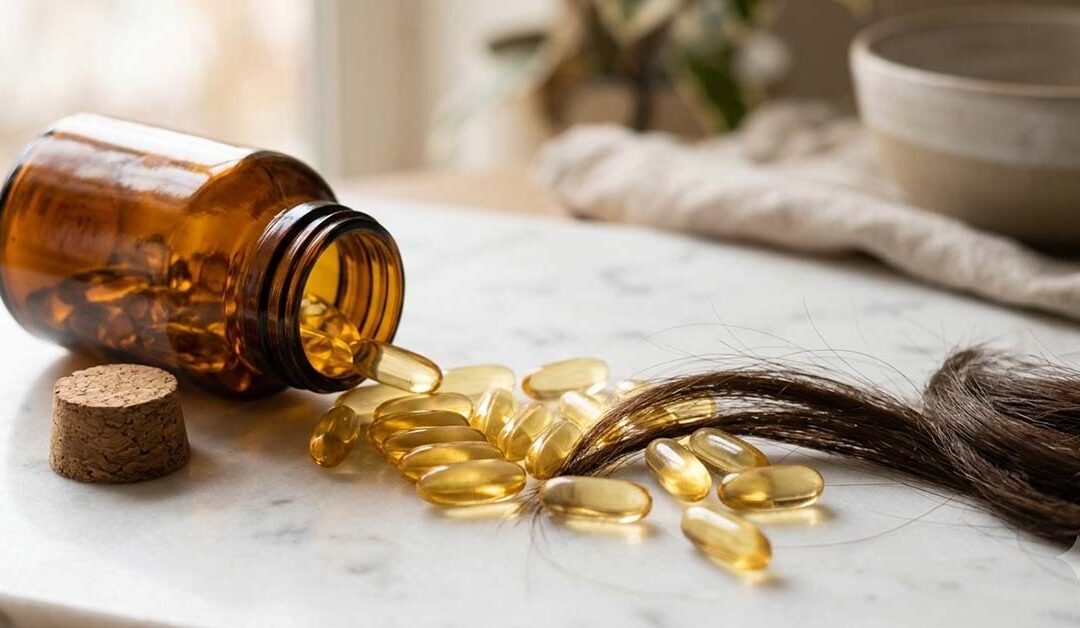
If you have walked down the supplement aisle recently, you have probably noticed that biotin is everywhere — in standalone capsules, in hair-and-nail formulas, in gummy vitamins marketed to anyone hoping for a thicker, fuller head of hair. It is one of the bestselling dietary supplements in the United States, and the claims on those labels are difficult to resist: more hair, stronger nails, visible results in four to eight weeks. The market for biotin supplements runs into the hundreds of millions of dollars annually, fueled in large part by before-and-after testimonials and an almost universal belief that more of a good thing is always better.
But does biotin actually deliver on those promises? If you are experiencing hair thinning or shedding, the answer matters — because the last thing you want is to spend months on a supplement that cannot address the real reason your hair is changing. Understanding what a hair follicle actually needs to produce healthy hair is a good starting point, and biotin’s role in that process is more specific — and more limited — than most supplement marketing suggests.
What Does Biotin Do to Your Body?
Biotin is a water-soluble B vitamin (also referred to as vitamin B7 or vitamin H) that plays an essential role in the body’s metabolic processes. It functions primarily as a coenzyme: it helps activate a class of enzymes called carboxylases, which are responsible for converting carbohydrates, fats, and proteins into usable energy. Without adequate biotin, this cellular machinery slows. Biotin’s role as a coenzyme is well established in the biochemistry literature, and it is why genuine deficiency has measurable health consequences.
When it comes to hair specifically, biotin’s relevance lies in keratin — the fibrous structural protein that forms the hair shaft, the nail plate, and the outermost layer of skin. Biotin contributes to the enzymatic processes that support keratin synthesis, which is the origin of its reputation as a hair and nail supplement. That connection is real. What biotin does not do, however, is directly stimulate follicle activity, block the hormonal triggers behind pattern hair loss, or prompt regrowth in follicles that have already miniaturized. Biotin supports an infrastructure. It does not rebuild one that has already been compromised.
It is also worth knowing that biotin is present in a wide range of everyday foods: eggs, salmon, almonds, sweet potatoes, spinach, avocado, and whole grains all contain meaningful amounts. Most adults who eat a reasonably varied diet are already meeting their daily biotin needs without any supplementation.
Does Biotin Deficiency Actually Cause Hair Loss?
Yes — but true biotin deficiency is uncommon in healthy adults. Because biotin appears in so many foods and the body requires it in relatively small amounts, most people never develop a clinically meaningful shortfall from diet alone.
When deficiency does occur, it produces a recognizable picture: hair thinning, brittle nails, a scaly skin rash around the eyes and nose, and neurological symptoms including fatigue and depression. It tends to develop in people with certain rare genetic disorders affecting biotin metabolism, in heavy alcohol users, in pregnant women with increased biotin needs, in people on prolonged antibiotic therapy, or in those who regularly consume large quantities of raw egg whites – which contain a protein called avidin that blocks biotin absorption in the gut.
The clinical distinction that matters here is this: supplementing biotin in someone who is genuinely deficient can restore normal function and may reverse deficiency-related hair loss. Supplementing biotin in someone with adequate biotin levels produces no additional benefit. You cannot supercharge a system that is already running correctly by adding more of a nutrient it does not lack. This is the gap between what supplement marketing implies and what science actually supports.
Does Biotin Regrow Hair?
This is the question that sells millions of bottles, and the honest answer is: for most people, probably not. The clinical literature supporting biotin for hair regrowth is limited primarily to case reports and small observational studies involving patients with documented deficiencies or specific rare hair shaft disorders. Large, well-designed randomized controlled trials demonstrating that biotin meaningfully improves hair density or reduces shedding in people without deficiency do not exist.
The most common form of hair loss in both men and women — androgenic alopecia, or pattern hair loss — is driven by a genetic sensitivity to dihydrotestosterone (DHT), a hormone derived from testosterone that causes hair follicles to miniaturize over time. Affected follicles gradually produce shorter, finer strands until they stop producing visible hair entirely. Biotin plays no role in blocking DHT, preserving follicle size, or disrupting this process at any point.
That said, there is a real scenario in which addressing a nutritional gap makes a difference. If your hair is thinning because of a restrictive diet, prolonged stress, postpartum hormonal changes, or a condition affecting nutrient absorption, correcting those deficits — including biotin if it is among them — may allow shedding to normalize. In those cases, biotin is typically one component of a broader nutritional correction, not the driver of recovery. Understanding the actual cause of your hair loss is the step that determines whether any supplement has a role to play.
How Much Biotin Should You Take a Day?
The Adequate Intake (AI) for biotin established by the National Institutes of Health is 30 micrograms (mcg) per day for adults. This is the level considered sufficient for most healthy people based on observed dietary intakes in apparently healthy populations. Unlike many nutrients, there is no established Recommended Dietary Allowance (RDA) for biotin because sufficient data to define a precise average requirement are not yet available.
The doses found in commercial hair growth supplements tend to be dramatically higher — commonly in the range of 2,500 to 10,000 mcg per serving, and sometimes well above that. This represents 80 to 300 times the Adequate Intake level. There is no published evidence that megadoses produce meaningfully better outcomes for hair than physiological doses. If you choose to supplement, a dose in the lower range of what research has used (roughly 1,000 to 2,500 mcg) is generally what practitioners reference, though even this exceeds physiological needs substantially. The rationale for going higher is not supported by evidence; the risks of doing so are discussed below.
How Long Does It Take for Biotin to Work on Hair?
Hair grows slowly, and the biology behind it is cyclical. Each strand on your scalp moves through three phases: the anagen phase (active growth, lasting two to seven years depending on the individual), the catagen phase (a brief transitional period of two to three weeks), and the telogen phase (a resting period of roughly three months before the hair sheds and a new one begins). Under normal conditions, hair grows approximately half an inch per month.
This biology is what makes any supplement’s results slow to appear. Most practitioners suggest evaluating any hair-focused supplement after three to six months of consistent use — not because that is a magic window, but because it is the minimum time needed for new growth to be measurable. If you have taken biotin consistently for six months and are still noticing significant shedding or continued thinning, the supplement is likely not addressing the actual driver of your hair loss, and a clinical evaluation is worth pursuing.
Is Biotin Safe? Can You Take Biotin Every Day?
For most healthy adults, biotin is safe at commonly used doses. As a water-soluble vitamin, excess biotin is excreted through urine rather than accumulating in body tissue the way fat-soluble vitamins such as A, D, E, and K can. This makes outright biotin toxicity from supplementation very unlikely, and daily use at standard supplement doses is considered safe for most people with no known contraindications.
There is no established Tolerable Upper Intake Level (UL) for biotin, which means regulatory bodies have not identified a dose at which harm from intake consistently and predictably occurs. The absence of a defined upper limit, however, is not an endorsement of unlimited dosing. It reflects a lack of sufficient safety data on very high intakes rather than a scientific finding that all doses are equally benign. At higher doses — which are, again, the doses found in most commercial hair supplements — there is a specific and well-documented concern that has nothing to do with biotin toxicity and everything to do with how it interacts with medical testing.
Are There Side Effects to Taking Biotin?
For most people, biotin supplements are well tolerated at standard and moderate doses with no notable side effects. At higher doses, some users report mild gastrointestinal discomfort, acne-like breakouts (thought to be related to biotin’s competitive relationship with pantothenic acid, another B vitamin that plays a role in skin health), or changes in urine odor. These effects tend to be minor and typically resolve when the dose is lowered or discontinued.
Can Too Much Biotin Hurt You?
The most clinically significant concern with high-dose biotin is not toxicity in the traditional sense — it is laboratory interference. The FDA has issued formal safety communications warning that high biotin intake can substantially distort the results of a wide range of blood tests, including thyroid function panels, cardiac troponin assays (used to diagnose heart attacks), hormone panels, and other immunoassay-based tests. Depending on the specific test and biotin concentration, interference can produce results that are either falsely elevated or falsely low — both of which carry serious clinical consequences, including misdiagnosis or delayed diagnosis of life-threatening conditions.
This is not a hypothetical concern. There are documented cases in which high biotin supplementation contributed to delayed cardiac diagnoses due to artificially suppressed troponin readings. At doses of 2,500 mcg and above — the standard range in hair supplements — the risk is clinically meaningful. If you are taking a high-dose biotin supplement and have bloodwork scheduled, inform your physician and your laboratory before testing, and ask whether pausing supplementation for at least 72 hours beforehand is advisable.
When Biotin Isn’t Enough
If you have been taking biotin consistently for several months and are still noticing thinning, increased daily shedding, a widening part, or a receding hairline, the supplement is almost certainly not targeting the underlying cause of your hair loss. Hair loss has many drivers — androgenic alopecia, telogen effluvium (stress- or illness-related shedding), autoimmune conditions such as alopecia areata, thyroid dysfunction, nutritional deficiencies beyond biotin alone, and scalp health issues among them — and none of these respond in any meaningful way to biotin supplementation on its own. Identifying which one is affecting you requires a clinical eye, not a supplement label.
For patients in the early or moderate stages of hair loss, clinically supported options do exist. Non-surgical treatments like platelet-rich plasma (PRP) therapy work directly at the follicle level, delivering concentrated growth factors drawn from your own blood to signal existing follicles to remain in the active growth phase. Unlike biotin, PRP is designed to intervene in the physiological process that drives hair loss rather than simply supporting general nutrient availability. For patients with more significant loss, FUE hair transplant surgery offers a permanent solution by relocating genetically resistant donor follicles to areas of thinning — follicles that will continue producing hair for a lifetime regardless of DHT activity.
Knowing which path is right for your pattern and your goals is something a supplement label cannot tell you. A conversation with an experienced hair restoration specialist can.
Hair Health Advice and Treatment Options
If you are questioning whether a supplement can reverse what you are seeing in the mirror, it is worth having a real conversation with someone who can examine your scalp, evaluate your pattern of loss, and tell you exactly what is driving it. At LA FUE Hair New York, Dr. Anton and his team work with patients at every stage of hair loss — from early thinning to significant recession — offering both non-surgical options and advanced FUE hair transplant procedures at our Garden City and Manhattan locations. The first step is a consultation. Book yours today.
If this was useful, tell Google you want more of it.